Ligne de production de farine de riz 30 T/J au Vietnam
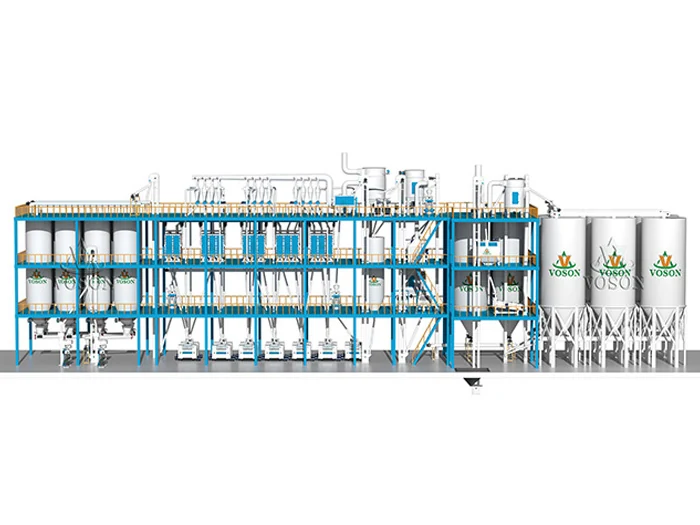
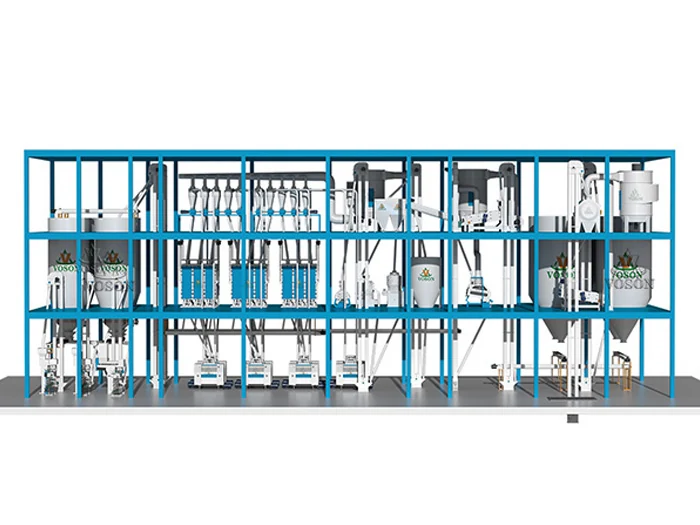
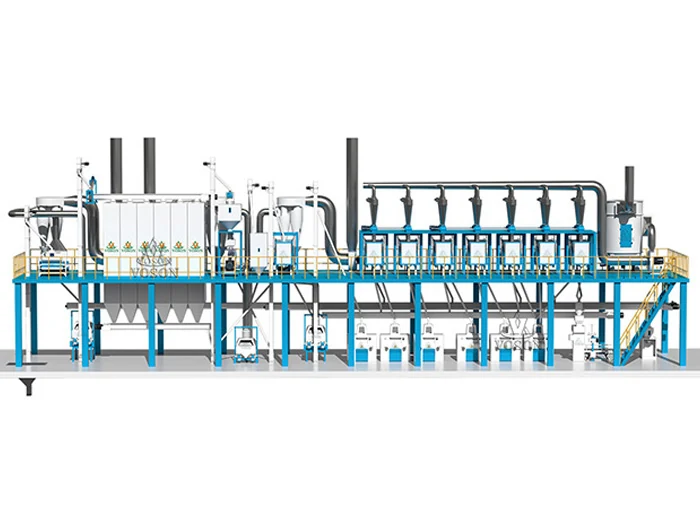
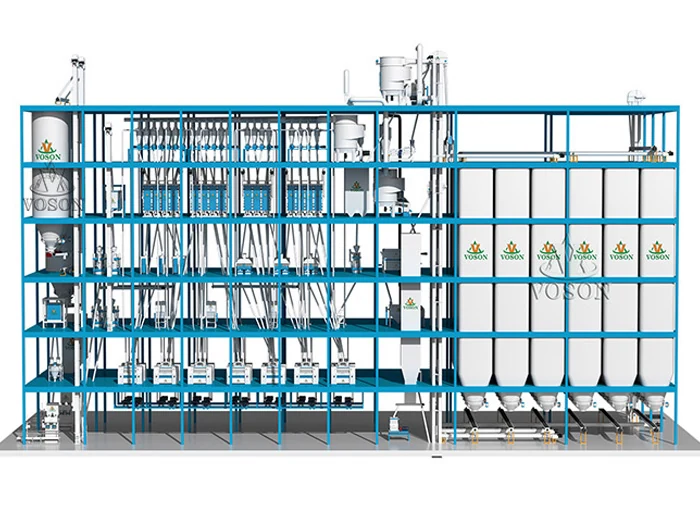
Cette ligne de production de farine de riz de 30 tonnes par jour a été présentée pour un projet au Vietnam. Elle couvre la préparation de la matière première, la mouture, le tamisage et le conditionnement de la farine.
Le premier choix technique concerne la forme du riz reçu par l'usine. Une ligne alimentée en riz paddy doit inclure décorticage et séparation des balles. Avec du riz blanchi ou des brisures de riz, ces opérations changent ou disparaissent. Les deux cas ne doivent pas utiliser automatiquement la même liste d'équipements.
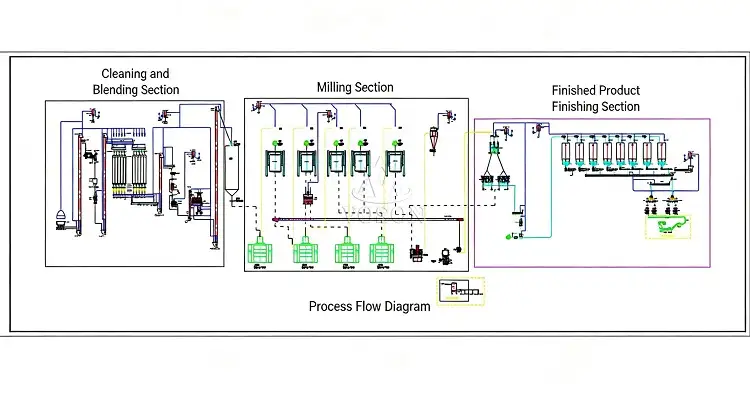
Données de base de la solution
| Élément | Base de conception |
|---|---|
| Pays du projet | Vietnam |
| Capacité nominale | 30 tonnes de matière première par jour |
| Produit | Farine de riz |
| Matière première | À confirmer : paddy, riz blanchi ou brisures |
| Finesse | À confirmer par échantillon et application finale |
| Étapes finales | Mouture, tamisage et conditionnement |
La capacité et la finesse doivent être précisées avec le nombre d'heures de travail. Une valeur en mesh ne suffit pas sans méthode de mesure et distribution granulométrique.
Deux schémas possibles selon le riz entrant
Avec du paddy, le procédé comprend le nettoyage, l'épierrement, le décorticage, la séparation des balles et la préparation du riz avant broyage. Le dimensionnement doit tenir compte de la balle et du son retirés avant la production de farine.
Avec du riz déjà blanchi ou des brisures, la ligne peut commencer par un nettoyage de sécurité, une séparation magnétique et un contrôle de la matière. Cette configuration évite d'installer un décorticage inutile, mais elle exige une matière première régulière.

Mouture, tamisage et contrôle de la finesse
- Alimentation régulière pour stabiliser la charge du moulin.
- Broyage en une ou plusieurs étapes selon la finesse demandée.
- Tamisage pour séparer les particules conformes et les refus.
- Retour contrôlé des fractions grossières vers la mouture.
- Aspiration et maîtrise de la température dans la section de broyage.
- Conditionnement protégeant la farine contre l'humidité.
Le choix du moulin dépend de la farine visée et du comportement du riz. Des essais sont utiles lorsque le client demande une farine très fine ou destinée à une application spécifique.
Informations à fournir pour une offre précise
- Photos, analyse et échantillon du riz entrant.
- Type de riz : paddy, blanchi, étuvé ou brisures.
- Application de la farine et spécification granulométrique.
- Capacité journalière et nombre d'heures de production.
- Tension électrique, humidité ambiante et espace disponible.
- Poids des sacs et niveau d'automatisation souhaité.
Ces éléments permettent de calculer le bilan matière, le débit de chaque section et les utilités nécessaires.
Intégration de la ligne au site
Le plan d'implantation doit séparer la réception du riz, la zone propre de mouture et le stockage de la farine. Il doit aussi prévoir l'aspiration, les accès de maintenance et les flux du personnel et des emballages.
Voson peut combiner cette solution avec les équipements de nettoyage, transport et conditionnement. D'autres configurations sont présentées dans les projets de transformation des céréales.
FAQ
1. La ligne doit-elle toujours inclure une décortiqueuse de riz ?
Non. Elle est nécessaire avec du paddy. Pour du riz blanchi ou des brisures propres, la préparation est différente.
2. Que signifie une capacité de 30 T/J ?
Elle désigne normalement la quantité de matière première traitée par jour selon les heures et conditions prévues, pas nécessairement 30 tonnes de farine.
3. Comment choisir la finesse de la farine ?
La finesse doit correspondre à l'application finale. Le client doit fournir un échantillon ou une spécification mesurable avant le choix du système de broyage.