Système d’essais de mouture en laboratoire
Un système d’essais de mouture en laboratoire reproduit à petite échelle les principales opérations d’une minoterie. Il aide les meuniers, laboratoires et équipes de développement à comparer des lots de blé ou de maïs, à régler le broyage et à préparer un projet industriel. Cette page traite du protocole et de l’intégration du système; la fiche du moulin de laboratoire Voson présente la machine dédiée.
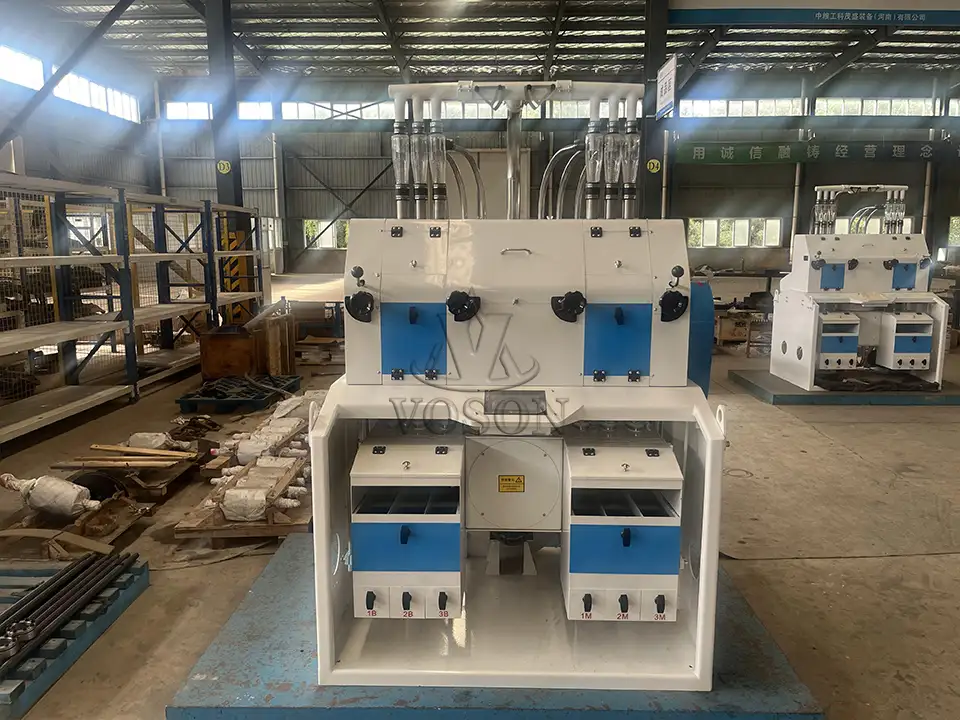
Objectifs d’un essai de mouture
L’essai ne remplace pas l’analyse du grain. Il complète les mesures d’humidité, de protéines, de cendres ou de dureté en montrant comment l’échantillon réagit au conditionnement, aux cylindres et au tamisage. L’équipe peut alors comparer plusieurs réglages avec une méthode documentée plutôt que juger seulement l’apparence d’une poignée de farine.
- Évaluer le comportement d’un lot de céréales
- Comparer des réglages de conditionnement et de broyage
- Produire des échantillons pour une recette ou un client
- Estimer la répartition entre farine, semoule et coproduits
- Préparer les hypothèses d’une ligne industrielle
Configuration du système pilote
Une installation peut associer nettoyage d’échantillon, humidification, temps de repos, broyeur à cylindres, tamisage et collecte séparée. La configuration varie selon le blé, le maïs et le résultat recherché. Le contrôle de la masse à chaque étape permet d’établir un bilan matière et de repérer les pertes avant de comparer les essais.
| Étape | Donnée contrôlée | Utilité |
|---|---|---|
| Préparation | Masse, humidité, impuretés | Créer une base comparable |
| Conditionnement | Eau et temps de repos | Préparer le grain |
| Broyage | Écartement et débit | Tester la réduction |
| Tamisage | Mailles et fractions | Classer les produits |
| Analyse | Rendement, cendres, taille, couleur | Comparer les scénarios |
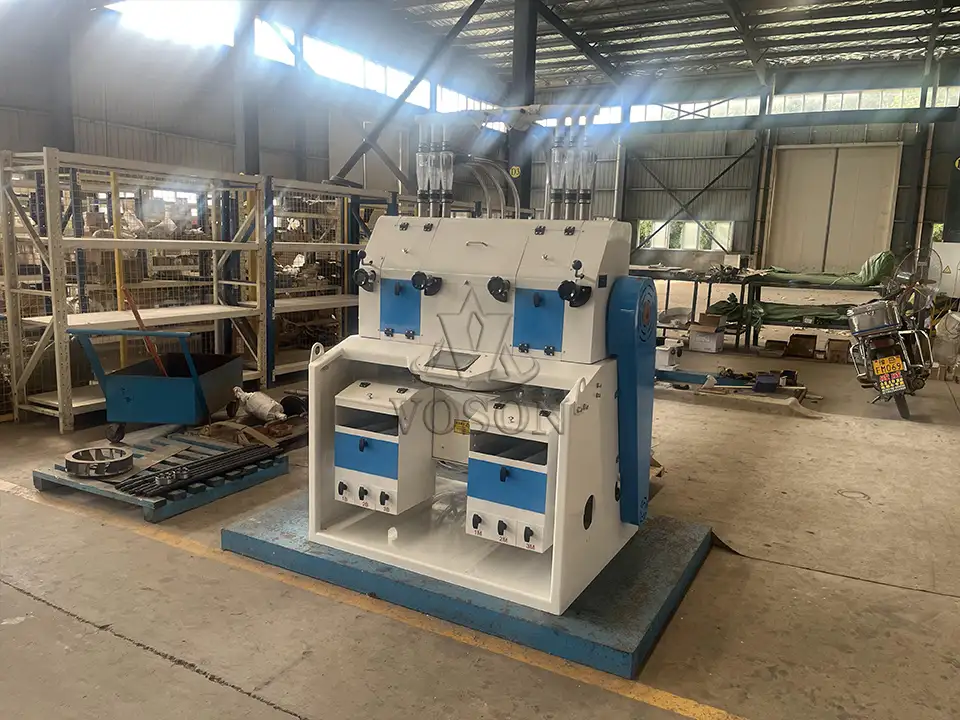
Protocole et répétabilité
Deux essais ne sont comparables que si l’équipe applique la même méthode. Elle enregistre la masse d’entrée, l’humidité, la durée de conditionnement, les réglages, le temps de marche et les fractions récupérées. Un nettoyage complet entre les échantillons évite la contamination. Des répétitions permettent d’identifier une variation de procédé au lieu de l’attribuer à tort au grain.
Interpréter les résultats
Un rendement de laboratoire ne devient pas automatiquement le rendement d’une usine. Les machines, les flux de recyclage, la température, les opérateurs et la durée de production changent à grande échelle. Les résultats servent à comparer les options et à définir des essais industriels. Ils doivent rester associés au protocole, à l’échantillon et aux instruments utilisés.
Passage à l’échelle industrielle
Voson peut utiliser les résultats pour discuter du diagramme de nettoyage, du nombre de passages, du tamisage et du portefeuille de farines. L’ingénieur ajoute ensuite les contraintes de débit, stockage, aspiration, automatisation et emballage. Cette démarche réduit l’incertitude sans promettre qu’un petit essai reproduira exactement tous les phénomènes d’une usine.
Questions fréquentes
1. Un moulin de laboratoire mesure-t-il directement les protéines ?
Non. Il produit les fractions de mouture; les protéines et autres paramètres nécessitent des méthodes ou instruments d’analyse adaptés.
2. Quelle quantité de grain faut-il envoyer ?
Elle dépend du protocole, du nombre de réglages et des analyses. Le laboratoire doit la confirmer avant l’expédition.
3. Les résultats garantissent-ils le rendement industriel ?
Non. Ils orientent la conception et les essais, mais le passage à l’échelle doit intégrer les conditions de l’usine.